Published March 17, 2010
KROAKY’S KARAOKE
Kroaky’s Karaoke, 4400 S. Tamiami Trail, Sarasota, 926-3434 or kroakys.com.
If you haven’t yet realized, Sarasota loves it some karaoke. But there’s only one place in town where you can get your fix seven nights a week. Kroaky’s lets you rent out a room with your friends and pick the songs and singers yourself. The duet combinations are endless — just don’t hog the mic.
CABANA INN & LOUNGE
Cabana Inn & Lounge, 2525 S. Tamiami Trail, Sarasota, 955-0195 or opensarasota.com, Thurs. and Sun.
Cabana has one of the most popular and varied karaoke nights in town. You can expect to hear anything from ’60s folk to ’80s electronic to Kings of Leon. This is just as good a place as any to break out the Journey, so don’t stop believin’. (more…)
Category: Music
-
Making its case: How Mattison’s City Grille convinced the Sarasota City Commission to change its tune on downtown outdoor live music
Published February 17, 2010 Since the Downtown Partnership asked Paul Mattison to open his outdoor dining venue on the corner of Lemon Avenue and Main Street seven years ago, Mattison’s City Grille let live bands play until 11 p.m. during the week and midnight on weekends. The restaurant had received a half-dozen or so sporadic noise complaints over the years, but the city never took action. Which it could have, since city code states that the cutoff time for live music at a non-enclosed structure is 10 p.m. on weekdays and 11 p.m. on weekends. When an anonymous noise complaint targeted Mattison’s in early November 2009, though, the Sarasota Police Department intervened, delivering a blow to the business’ bottom line. “We’ve been there for seven years and we’ve always done those hours and we never had an issue,†says Mattison. “Then out of the blue we got this one complaint and they were on us like white on rice.†The move had such a negative effect on business that Mattison felt the need to go before the City Commission to make his case for a legal extension of the cutoff time. “The other thing that I tried to get them to do, but they didn’t, is that you can’t complain anonymously,†he says. “It could be a former competitor. It could be anybody. … That’s the most frustrating part. You want to be able to pick up the phone and say, ‘Let’s talk about it.’†(more…) -
Online organizing: Music Scene and Be Seen launches a new website in an effort to unify supporters of original live music
Published February 17, 2010 If you turn your FM dial to WSLR 96.5 from 1 to 3 p.m. on Saturday afternoons you will hear a pair of radio personalities that have become Sarasota’s biggest voices against unfair noise regulations. Terry “T-Bone†Rhodes and his sidekick, Chris “Quazi†Young, invite guests onto their community radio show, Music Scene and Be Seen, each week to listen to some local original music and hammer on the area noise ordinances, even more so recently with guests from the upcoming Noise Ordinance CD. “Quaz and I are the rebels of the radio station,†says Rhodes. “They say, ‘You’re talking about the noise ordinance again?’ And we say, ‘Yeah, it’s our pet peeve.’†While the radio show has been running for nine months, Rhodes says the idea came much sooner. He had developed a business plan in 2006 that included both radio and TV shows along with a website, all focusing on the Suncoast original music scene and the venues that support it. “Way back then I was talking about the noise ordinance,†he says. “When I got here I was so disappointed that people accepted the same cover crap. I was expecting this vibrant original scene.†(more…) -

2010 Spring Arts Preview — The Noise Issue: Inane regulations have prevented Sarasota from becoming a great live music town, but the times might be a-changin’
Published in Creative Loafing Sarasota, January 27, 2010 In 1996, Phil Dasher, at the time president of the Condominium on the Bay Association, was determined to have noise from The Quay, a now-demolished outdoor mall across from the condos, shut down. After the nightclub In Extremis opened, Dasher says the area quickly went downhill. “There was rape, robberies, riots,†he says. The city — which had regulations about how loud venues could get — didn’t do much to help. “The city at the time had noise ordinances that were subjective and objective. Neither of them worked. The police weren’t interested in enforcing them. What’s loud and raucous to a policeman who is 25 years old is a lot different than how the older people think,†Dasher says.
Dasher lodged hundreds of complaints about noise emanating from The Quay. Little did he know, his effort to shut down one rowdy nightspot would have far-reaching consequences for the city of Sarasota for more than a decade to come. The restrictions the city implemented at least partially as a result of Dasher’s campaign (commonly lamented simply as “the noise ordinanceâ€) have put countless local musicians out of work, handcuffed local businesses’ efforts to draw crowds and harmed Sarasota’s reputation as a destination amongst younger tourists.
Not that Dasher cares. “Let me tell you something: There’s a great deal of difference between culture and tribalized behavior,†he says. “‘We need music,’ ‘we need,’ ‘we need,’ and I just don’t buy it. Mattison’s has been very successful. I’m not thrilled with al fresco dining but he’s entitled to make money and have a nice operation, but noise at the expense of thousands of residents? It’s not Orlando, or Tampa, or St. Pete.†(more…)
In 1996, Phil Dasher, at the time president of the Condominium on the Bay Association, was determined to have noise from The Quay, a now-demolished outdoor mall across from the condos, shut down. After the nightclub In Extremis opened, Dasher says the area quickly went downhill. “There was rape, robberies, riots,†he says. The city — which had regulations about how loud venues could get — didn’t do much to help. “The city at the time had noise ordinances that were subjective and objective. Neither of them worked. The police weren’t interested in enforcing them. What’s loud and raucous to a policeman who is 25 years old is a lot different than how the older people think,†Dasher says.
Dasher lodged hundreds of complaints about noise emanating from The Quay. Little did he know, his effort to shut down one rowdy nightspot would have far-reaching consequences for the city of Sarasota for more than a decade to come. The restrictions the city implemented at least partially as a result of Dasher’s campaign (commonly lamented simply as “the noise ordinanceâ€) have put countless local musicians out of work, handcuffed local businesses’ efforts to draw crowds and harmed Sarasota’s reputation as a destination amongst younger tourists.
Not that Dasher cares. “Let me tell you something: There’s a great deal of difference between culture and tribalized behavior,†he says. “‘We need music,’ ‘we need,’ ‘we need,’ and I just don’t buy it. Mattison’s has been very successful. I’m not thrilled with al fresco dining but he’s entitled to make money and have a nice operation, but noise at the expense of thousands of residents? It’s not Orlando, or Tampa, or St. Pete.†(more…) -

Local CD Review: Fancy Rat’s debut self-titled EP is a dance-happy hodgepodge of revelry
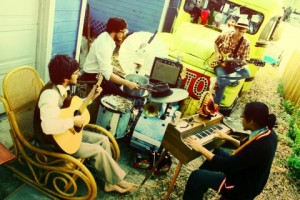 Published June 30, 2010The latest band to emerge from Sarasota’s steam-gaining Finch House Collective started as a rough side project and has now come to fruition as the party-in-your-pants known as Fancy Rat. Frontman Brian Yoder set aside his experimental folk solo project JesusChryslerSupercar to join with bassist Adam Marret (previously of The Silent Film Exhibitionists Club), lead guitarist Toby Norton and drummer Adam Brammer. The eventual addition of French horn player Sarah Mobarekeh and tambourinist beat-boxer Daniel Dean Demerin rounds out one of the most unique original sounds to rise from the local scene yet. (more…)
 -

Sarasota’s Svend Asmussen reflects on a career as one of the most sought-after jazz violinists of the past century
 Published Dec. 14, 2009
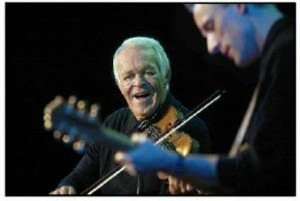
Sitting across from Svend Asmussen in The Jazz Club of Sarasota office, it’s easy to see how he blends into the Sarasota community. A full head of white hair sits atop his blotchy, wrinkled face, which somehow still holds the boyish look it’s had throughout his 93 years. A cane rests on the arm of the chair he slouches in as he watches his wife Ellen show me some of his recently released albums, a copy of his autobiography June Nights, his cover story in Fiddler magazine, and an award he just received for 75 years as a performer from an association of composers from Sweden, Estonia, Denmark, Norway and Iceland.
While his name may not ring a bell to most Americans, make no mistake — Asmussen can’t walk down the street in Scandinavian countries without encountering a fan. After seven decades as the world’s greatest jazz violinist, a little anonymity is nice.
“That’s one reason I’ve performed so little in America,†Asmussen says in his Danish accent, his hands constantly in motion, “because I was busy in all these countries. The first one that tried to get me over here was Benny Goodman, right after the war. He called me and suggested that I should come over and join his small group. I was playing Paris at that time. I was so busy doing things in Europe I had to give him a rain check.â€
Goodman is but one name in the extensive list of jazz legends Asmussen has played and recorded with over the years. Fats Waller, Josephine Baker, Count Basie, Herbie Hancock, Lionel Hampton, Hoagy Carmichael, Coleman Hawkins, Edith Piaf, Ray Nance, Jean-Luc Ponty, Toots Thielemans, Django Reinhardt, the Mills Brothers — the list goes on and on.
Born in Copenhagen in 1916, Asmussen first picked up the violin at age 7, studying the classical composers his German-born parents acquired from their homeland. At age 16 he heard a record by jazz violinist Joe Venuti. He was hooked. “I said to myself, ‘That’s what I want to do, play that music.’ I copied his style. But then after a few years I heard the first records by Stuff Smith, my very good friend … which I and many others consider the best jazz fiddle player that’s ever been. There will probably never be another like Stuff. I learned a lot from him; he taught me swinging fiddle.â€
While Asmussen can groove to pretty much any of jazz’s many sub-genres, he judges the music by how much it “swings.†He considers the swinging era as jazz’s golden age. “When it comes to jazz music there was a high point artistically in the ’30s and ’40s. That quality has never been surpassed. The more intellectual jazz music got, the less personal interest I had in it.â€
Not surprisingly, Asmussen inserted himself into the heart of the swing era by opening a jazz club in Copenhagen called Blue Heaven. But another aspect of that time period ruined the party: “That was during the occupation of the Germans during the war. [The club] only lasted a couple of years because the Germans [enforced a] curfew. From eight o’clock nobody could go out and even beer was limited; a pair could get one bottle of beer. You can’t run a jazz club like that.â€
Although the Nazis hated jazz Asmussen continued to play and gain popularity. This fame ultimately resulted in the most horrific experience of his life. In 1943 the Danish people started a strike to protest their government’s collaboration with the Germans. The Germans answered by arresting more than 300 of the most prominent Danes in Copenhagen: politicians, actors, musicians. “At five in the morning the doorbell was ringing and I got up in my pajamas and opened the door. There were two German soldiers with steel helmets and guns and a guy who looked like Hitler himself with the mustache and a black leather coat. They spoke German and said, ‘Put on your clothes and pack one set of underwear. You’re coming with us.’â€
Those arrested spent a few weeks in a Danish prison before being released — except Asmussen. The Nazis sent him to a German isolation prison in Berlin, never revealing why. Asmussen had attended a party in Sweden where guests had made fun of Hitler. He believes someone ratted on him. As he describes his confines to me he stands up to provide visual aid: “The cell was four steps this way and five steps back,†he says, pacing the room, “very dirty, 40,000 lice all over. They came out every night. They took everything away. You always had no food, you had to get up at seven o’clock in the morning and you were not allowed to lie down. There was a small stool you could sit on. You had nothing for months to occupy your brain.â€
Asmussen was given a ticket that read “Asmussen, 1955.†He expected to stay for 12 years, but was released as mysteriously as he was arrested after three months.
After the war Asmussen (pictured with Benny Goodman at right) joined some friends in the revue business and spent the next 18 years as a regular attraction on a Scandinavian variety show called the ABC Revue. His skits, mixing music and comedy, were wildly popular and cemented his stardom in Europe. In the early ’50s he was asked to be the music director on a Swedish cruise ship called the Kungsholm. “We went on several cruises to the Caribbean and around South America. In ’53 there were no tourists anywhere at that time, so we had a very good impression of all these big cities, Rio de Janiero and Buenos Ares. It was very genuine and old-fashioned.â€
The Kungsholm gave Asmussen his first opportunity to play in the U.S., something that had been a lifelong dream. “That’s where the whole thing happened. The only contribution in America’s cultural life is jazz music, created by black Americans,†he laughs, poking his finger on the table. “They have always been welcomed and admired in Europe.â€
Asmussen says the most fun he ever had playing jazz was between ’59 and ’61, when he formed a trio with singer Alice Babs and guitarist Ulrik Neumann called the Swe-Danes. The group was hugely popular in Scandinavia for their music-hall-style entertainment and toured all over Europe and the U.S. Not long after the group disbanded, Asmussen met the great Duke Ellington at an after-party in Stockholm. “When I came, Duke was already there playing on an upright piano. He sounded almost like Fats Waller, playing real genuine swing piano. I unpacked my fiddle and joined in and we went on for 10 minutes or so and came to an ending. He turned around and said, ‘Man, you play a hell of a lot of fiddle. What’s your name? My name’s Duke.’†The two went on to collaborate on numerous records.
After being asked if there was any one musician who he connected with most musically, Asmussen stares off with a long pause, then answers, “I would say Benny Goodman. He has a very bad reputation between musicians with his ray look. When he looked at one musician it meant they could expect to get fired. But I was one of the very few that got along with him. We were in his swimming pool listening to his big loud speakers. He only played his own records.†His wife Ellen elaborates: “It tells you a lot about him.â€
Asmussen met Ellen in Copenhagen shortly after his first wife of 62 years passed away in 2000. Ellen reminds him to tell me his slogan: “Oh yeah, I’m going for 100,†he says. “Maybe I could be lucky enough to celebrate my hundredth birthday by playing somewhere.†At least he will be celebrating the month before he turns 94, with his performance at the Sheraton Sand Key Resort in Clearwater, Jan. 15-17, for the 2nd Annual Arbors Records Invitational Jazz Party.
In addition to the gig, Asmussen has a new movie to promote, a documentary of his amazing life called Svend Asmussen: The Extraordinary Life and Music of a Jazz Legend, recently released in the U.S. with English subtitles. The DVD — which you can buy via shanachie.com or rent at Video Renaissance, 2243 Bee Ridge Road, Sarasota, 925-2780 — features three hours of vintage performances with jazz’s greatest players. As Asmussen opens his violin case, he tells me how he just started playing the instrument correctly by moving the shoulder rest to the right position. “If I moved it a bit it feels more natural. Even if you get a hundred years old you can still learn something.â€
Top and bottom photos courtesy Monifa Brown, middle shot by Tim Sukits
Published Dec. 14, 2009
Sitting across from Svend Asmussen in The Jazz Club of Sarasota office, it’s easy to see how he blends into the Sarasota community. A full head of white hair sits atop his blotchy, wrinkled face, which somehow still holds the boyish look it’s had throughout his 93 years. A cane rests on the arm of the chair he slouches in as he watches his wife Ellen show me some of his recently released albums, a copy of his autobiography June Nights, his cover story in Fiddler magazine, and an award he just received for 75 years as a performer from an association of composers from Sweden, Estonia, Denmark, Norway and Iceland.
While his name may not ring a bell to most Americans, make no mistake — Asmussen can’t walk down the street in Scandinavian countries without encountering a fan. After seven decades as the world’s greatest jazz violinist, a little anonymity is nice.
“That’s one reason I’ve performed so little in America,†Asmussen says in his Danish accent, his hands constantly in motion, “because I was busy in all these countries. The first one that tried to get me over here was Benny Goodman, right after the war. He called me and suggested that I should come over and join his small group. I was playing Paris at that time. I was so busy doing things in Europe I had to give him a rain check.â€
Goodman is but one name in the extensive list of jazz legends Asmussen has played and recorded with over the years. Fats Waller, Josephine Baker, Count Basie, Herbie Hancock, Lionel Hampton, Hoagy Carmichael, Coleman Hawkins, Edith Piaf, Ray Nance, Jean-Luc Ponty, Toots Thielemans, Django Reinhardt, the Mills Brothers — the list goes on and on.
Born in Copenhagen in 1916, Asmussen first picked up the violin at age 7, studying the classical composers his German-born parents acquired from their homeland. At age 16 he heard a record by jazz violinist Joe Venuti. He was hooked. “I said to myself, ‘That’s what I want to do, play that music.’ I copied his style. But then after a few years I heard the first records by Stuff Smith, my very good friend … which I and many others consider the best jazz fiddle player that’s ever been. There will probably never be another like Stuff. I learned a lot from him; he taught me swinging fiddle.â€
While Asmussen can groove to pretty much any of jazz’s many sub-genres, he judges the music by how much it “swings.†He considers the swinging era as jazz’s golden age. “When it comes to jazz music there was a high point artistically in the ’30s and ’40s. That quality has never been surpassed. The more intellectual jazz music got, the less personal interest I had in it.â€
Not surprisingly, Asmussen inserted himself into the heart of the swing era by opening a jazz club in Copenhagen called Blue Heaven. But another aspect of that time period ruined the party: “That was during the occupation of the Germans during the war. [The club] only lasted a couple of years because the Germans [enforced a] curfew. From eight o’clock nobody could go out and even beer was limited; a pair could get one bottle of beer. You can’t run a jazz club like that.â€
Although the Nazis hated jazz Asmussen continued to play and gain popularity. This fame ultimately resulted in the most horrific experience of his life. In 1943 the Danish people started a strike to protest their government’s collaboration with the Germans. The Germans answered by arresting more than 300 of the most prominent Danes in Copenhagen: politicians, actors, musicians. “At five in the morning the doorbell was ringing and I got up in my pajamas and opened the door. There were two German soldiers with steel helmets and guns and a guy who looked like Hitler himself with the mustache and a black leather coat. They spoke German and said, ‘Put on your clothes and pack one set of underwear. You’re coming with us.’â€
Those arrested spent a few weeks in a Danish prison before being released — except Asmussen. The Nazis sent him to a German isolation prison in Berlin, never revealing why. Asmussen had attended a party in Sweden where guests had made fun of Hitler. He believes someone ratted on him. As he describes his confines to me he stands up to provide visual aid: “The cell was four steps this way and five steps back,†he says, pacing the room, “very dirty, 40,000 lice all over. They came out every night. They took everything away. You always had no food, you had to get up at seven o’clock in the morning and you were not allowed to lie down. There was a small stool you could sit on. You had nothing for months to occupy your brain.â€
Asmussen was given a ticket that read “Asmussen, 1955.†He expected to stay for 12 years, but was released as mysteriously as he was arrested after three months.
After the war Asmussen (pictured with Benny Goodman at right) joined some friends in the revue business and spent the next 18 years as a regular attraction on a Scandinavian variety show called the ABC Revue. His skits, mixing music and comedy, were wildly popular and cemented his stardom in Europe. In the early ’50s he was asked to be the music director on a Swedish cruise ship called the Kungsholm. “We went on several cruises to the Caribbean and around South America. In ’53 there were no tourists anywhere at that time, so we had a very good impression of all these big cities, Rio de Janiero and Buenos Ares. It was very genuine and old-fashioned.â€
The Kungsholm gave Asmussen his first opportunity to play in the U.S., something that had been a lifelong dream. “That’s where the whole thing happened. The only contribution in America’s cultural life is jazz music, created by black Americans,†he laughs, poking his finger on the table. “They have always been welcomed and admired in Europe.â€
Asmussen says the most fun he ever had playing jazz was between ’59 and ’61, when he formed a trio with singer Alice Babs and guitarist Ulrik Neumann called the Swe-Danes. The group was hugely popular in Scandinavia for their music-hall-style entertainment and toured all over Europe and the U.S. Not long after the group disbanded, Asmussen met the great Duke Ellington at an after-party in Stockholm. “When I came, Duke was already there playing on an upright piano. He sounded almost like Fats Waller, playing real genuine swing piano. I unpacked my fiddle and joined in and we went on for 10 minutes or so and came to an ending. He turned around and said, ‘Man, you play a hell of a lot of fiddle. What’s your name? My name’s Duke.’†The two went on to collaborate on numerous records.
After being asked if there was any one musician who he connected with most musically, Asmussen stares off with a long pause, then answers, “I would say Benny Goodman. He has a very bad reputation between musicians with his ray look. When he looked at one musician it meant they could expect to get fired. But I was one of the very few that got along with him. We were in his swimming pool listening to his big loud speakers. He only played his own records.†His wife Ellen elaborates: “It tells you a lot about him.â€
Asmussen met Ellen in Copenhagen shortly after his first wife of 62 years passed away in 2000. Ellen reminds him to tell me his slogan: “Oh yeah, I’m going for 100,†he says. “Maybe I could be lucky enough to celebrate my hundredth birthday by playing somewhere.†At least he will be celebrating the month before he turns 94, with his performance at the Sheraton Sand Key Resort in Clearwater, Jan. 15-17, for the 2nd Annual Arbors Records Invitational Jazz Party.
In addition to the gig, Asmussen has a new movie to promote, a documentary of his amazing life called Svend Asmussen: The Extraordinary Life and Music of a Jazz Legend, recently released in the U.S. with English subtitles. The DVD — which you can buy via shanachie.com or rent at Video Renaissance, 2243 Bee Ridge Road, Sarasota, 925-2780 — features three hours of vintage performances with jazz’s greatest players. As Asmussen opens his violin case, he tells me how he just started playing the instrument correctly by moving the shoulder rest to the right position. “If I moved it a bit it feels more natural. Even if you get a hundred years old you can still learn something.â€
Top and bottom photos courtesy Monifa Brown, middle shot by Tim Sukits