
 Mar. 2, 2009
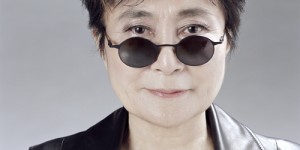
Yoko Ono and St. Armand’s Circle are presenting a collection of the late, great John Lennon’s art work entitled In My Life: The Artwork of John Lennon. The exhibit will be displayed on St. Armand’s Circle in the Park on John Ringling Boulevard from March 6-8. The proceeds will benefit “Take Stock in Children,†a nonprofit that helps low-income children by providing scholarships and mentors. I chatted via telephone with Mrs. Ono in New York about the exhibit and her life with a legend.
What is the charity that this exhibit is teaming up with?
The gallery will be benefiting “Take Stock in Children.†They take at-risk children and mentor them and pay for their college tuition. Isn’t that great?
Much of John’s work seems very simple. Did he mostly start out with just a pencil and a sketch pad?
I don’t know if I like your choice of words – it’s called minimalism. He was doing this kind of thing in high school. If you see this kind of thing you wouldn’t think someone in high school would be doing it. He wanted to make things animation-like, those things weren’t vogue back then, but they are very big now. He did everything quick, so if quick is the symbol of not too good, then whatever. He didn’t have to labor or anything, it just came to him.
When did John start holding art exhibits?
He was getting very busy with the tour when he met me, so he thought he didn’t have time for the exhibits. He did some, like the exotic gallery in London that was raided by the Scotland Yard. I suppose in some cases they don’t want to show the exotic, they just show it in the back room. It’s all about understanding the atmosphere in the particular location.
Are the pieces being displayed in St. Armands some of the same pieces that were confiscated during the art gallery raid in London?
I’m not sure which they picked. Every year they pick which ones they want to use. The curator will say “this is good, but we’d like to have that one too.†In the end, the curator pretty much creates the exhibit.
Which piece is your favorite?
Is that in your list of questions, because everyone seems to ask that? It’s very difficult to choose. I hand pick each piece that we put out, so it’s difficult for me to pick out one.
Is Sean into the visual arts too or mostly music?
Now he’s just focusing on music work, I think. It is important to point out that neither John nor I ever pushed him to do anything. He is now starting to be appreciated by the New York music scene, and that is great. He is starting to draw more, and he is doing amazing things that me or John couldn’t do. John was always very proud of the fact that he wasn’t an ordinary father, he was an artist. He loved teaching Sean like that.
What is the red symbol in the lower right hand corner of some pieces?
It is very Asian, a traditional Chinese and Japanese thing. He picked up on it when he was in Japan. He got into classic Japanese painting. He acquired a special Japanese brush that he used in his pieces. You can see his brushstrokes are very Japanese. He did all this without saying anything to me. I didn’t really think it was necessary, but that’s what he wanted. The characters actually mean “beautiful sound like a cloud.â€
Who were John’s biggest musical influences?
I think they were just doing want they wanted to do. He liked Elvis. There was some interesting music for instance, like American classic pop and if you look into rock and roll, there were albums that he made like American pop songs. I think it was very interesting that he studied them – American pop, rock and blues.
What is your fondest memory with John?
If I asked you about your wife or girlfriend, what would you say? I mean, we were together for the longest time, about 24 hours a day. Sometimes 26 hours (laughs). It was just everything.
Did John usually write the lyrics or the melody first?
It depends on the song, sometimes they come together. In his case they always kind of came together.
Which of his songs most changed the world?
Of course, people would say ‘Imagine,’ but there are many other songs that influenced people. He wrote about equal rights for women. I mean, I go take walks around Central Park and see women walking with two children in a stroller. I don’t remember that really being normal before John. With women’s rights and all that there are still some uphill struggles. I see it when I go to other countries. United States still has some problems, but a lot of Asian countries and Scandinavian countries are still having big problems. But he was a brilliant writer. Now, the world is starting to go back to a conservative mindset. The world goes very far out and then back again. It’s like the tide.

 “The problem is that if we leave kids back in FCATs in third grade for two years, which we can, by the time they get to seventh grade, they are young men. If they don’t get it then, they get frustrated and angry. The hood goes up, the attitude gets sullen, and they’re gone. Now, when you get to 10th grade, if you don’t pass the two FCATs, you’re not going to get your degree. So what’s the point in staying in? I have nothing against FCATs, I think testing kids is good. The attitude before was, ‘Why bother? They’re not going to get any better.’ This way at least the teachers are held to the line; they have to keep working; they have to keep trying. But we must be doing something wrong because we are at the bottom of a list of 50 states. We do a tutoring program every Saturday of the year. Any grade second through high school can come in and get tutored. I’m there every Saturday saying, ‘Please God, let there be enough tutors.’â€